Yelcho en la Patagonia Español
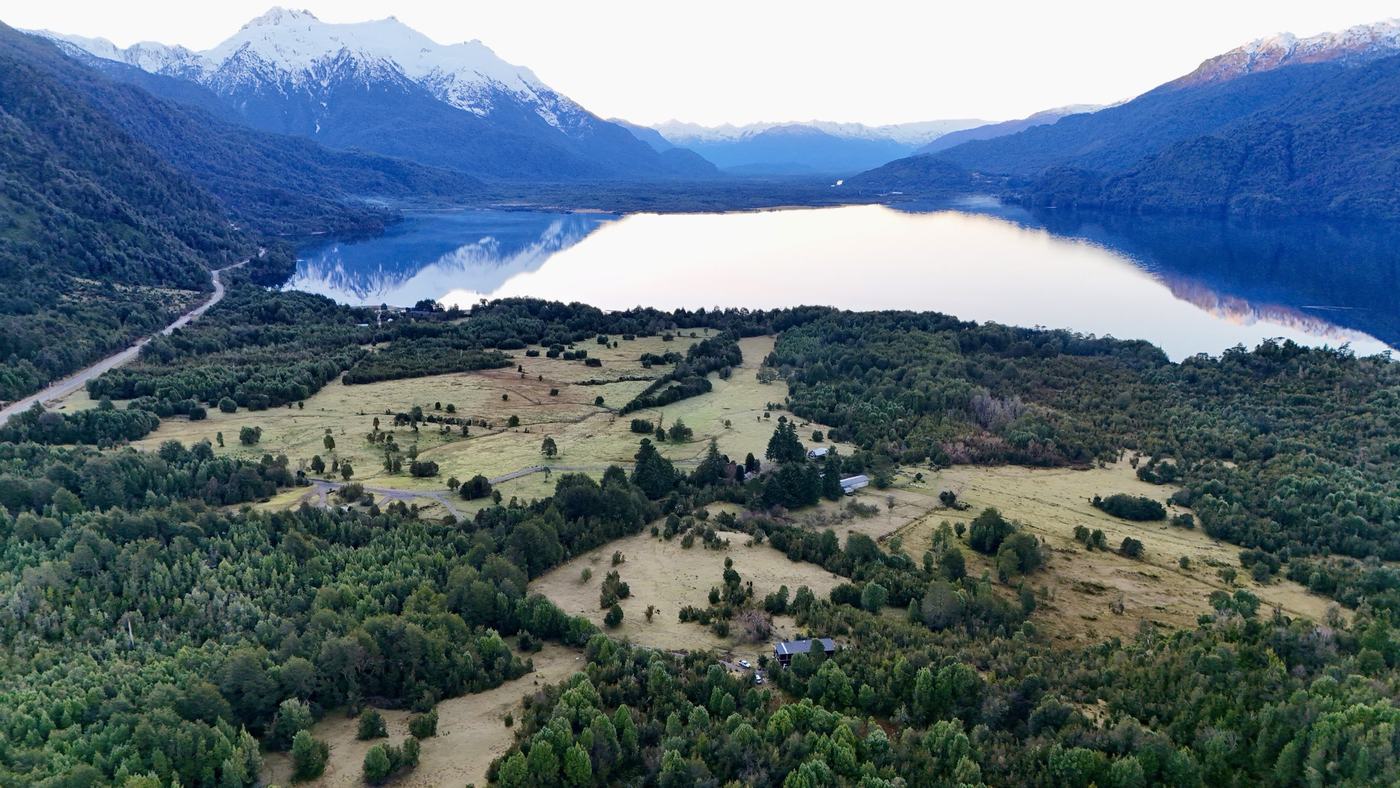
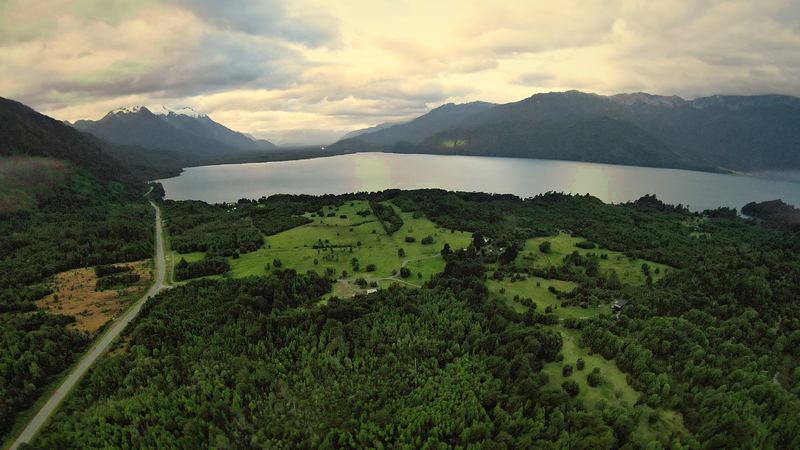
Aerial view of Fundo Rucapangue: pastures surrounded by native forest, Lake Yelcho and snow-capped mountains behind

Lake Yelcho · Carretera Austral km 253 · Chaitén, Chile

Fundo Rucapangue

The farm at Yelcho en la Patagonia. Pastures, livestock, a kitchen garden and native forest next to the hotel, the cabins and the campsite.

The farm

A working farm, not a backdrop

Rucapangue sits on the southern shore of the northern end of Lake Yelcho, near Puerto Cárdenas, on the Carretera Austral, between Corcovado National Park and Pumalín Park.

It is not a gated lodge or a reserve with no one in it. It is an active farm (a fundo, in Chile), with animals, a kitchen garden, firewood and managed forest, sharing its land with a tourism operation that has welcomed visitors since 1982.

Here conservation, farming and tourism live side by side, and none has pushed the others out. That means deciding, all the time, what gets touched and what does not. This page explains what is on the farm and how it will be run from 2027 to 2030.

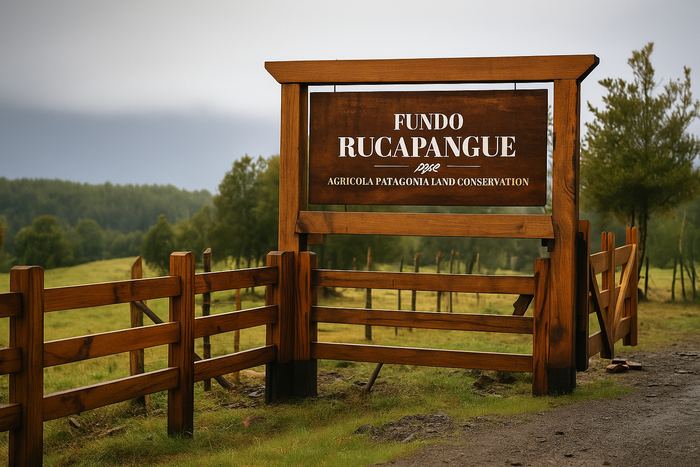
Wooden sign reading Fundo Rucapangue next to a fence and a pasture
The farm entrance, on the Carretera Austral.
750 hatotal area of the farm (1,850 acres)
84%of the farm is native forest
16paddocks, each one measured
90.6 haof paddocks, within about 100 ha of pasture
50breeding cows, the target for the herd
50ewes, the target for the flock
100hens laying eggs for the hotel
200 m³of dry firewood a year

Where it is

Yelcho from the air

A tour of just over a minute that starts on the map of South America and comes down to the lake: the property, the cabins, the campsite and the trail to the Yelcho Glacier lookout. On-screen labels are in Spanish.

  • Km 253 of the Carretera Austral, in Chaitén
  • 55 km from Chaitén on a paved road
  • Between Corcovado and Pumalín parks
1:19 · with sound · 18 MB

The land

750 hectares between the lake and Corcovado National Park

Most of the farm is forest. The pastures, paddocks and buildings sit on the low strip beside the lake and the Carretera Austral.

  • Native forest: 627 hectares. That is 84% of the area. Pasture and scrub add up to about 100 hectares.
  • Next door to Corcovado National Park. The whole western boundary of the farm borders the park.
  • Lake and rivers. It has 1,050 metres of sandy beach on Lake Yelcho and 5,830 metres of riverbank. Around it run the Ventisquero, Moraga, Sonoro and Yelcho Chico rivers, all part of the Yelcho River basin.
  • Gentle ground. 94% of the farm has slopes under 30%.

Maps

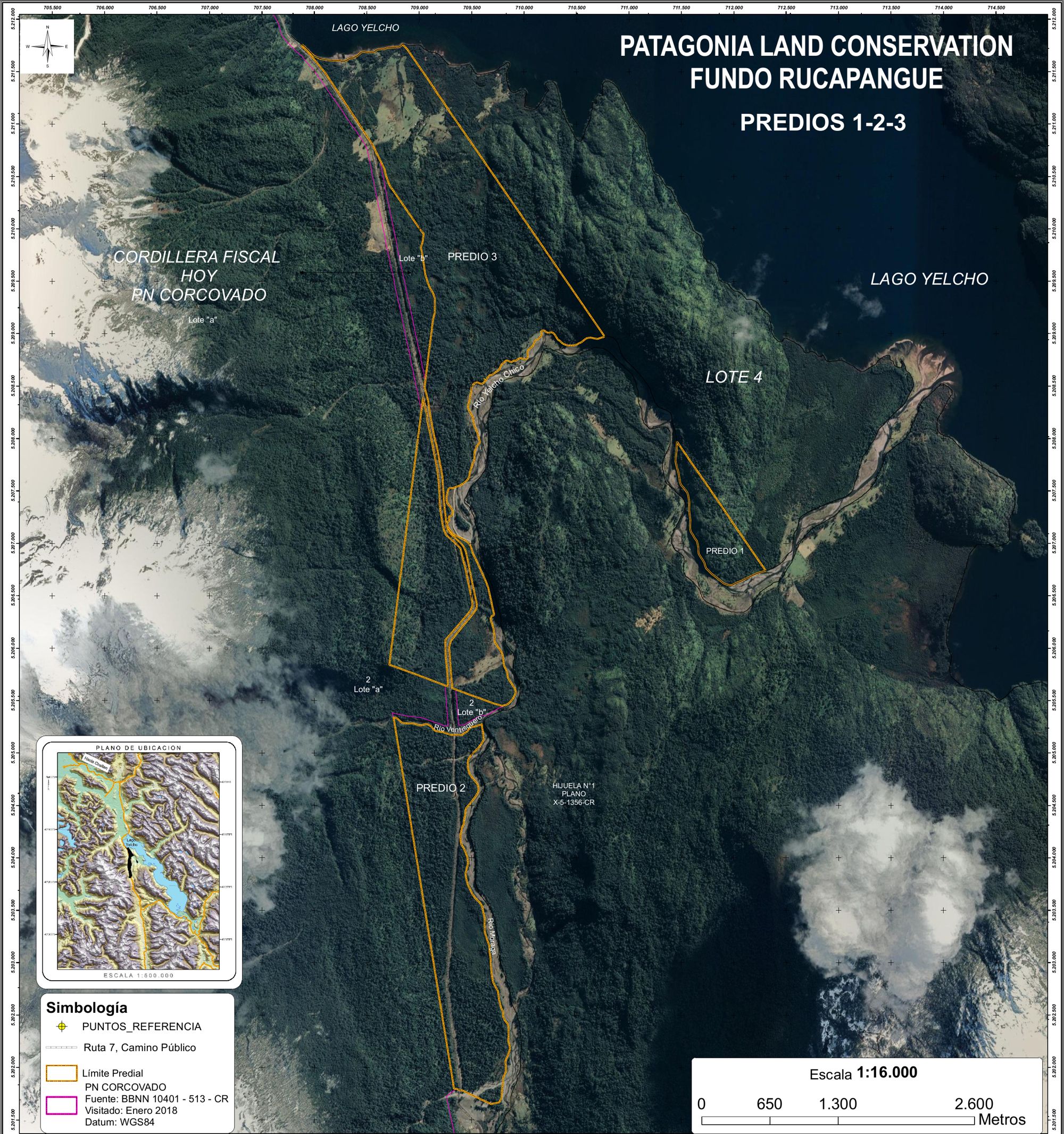
The farm is made up of three properties

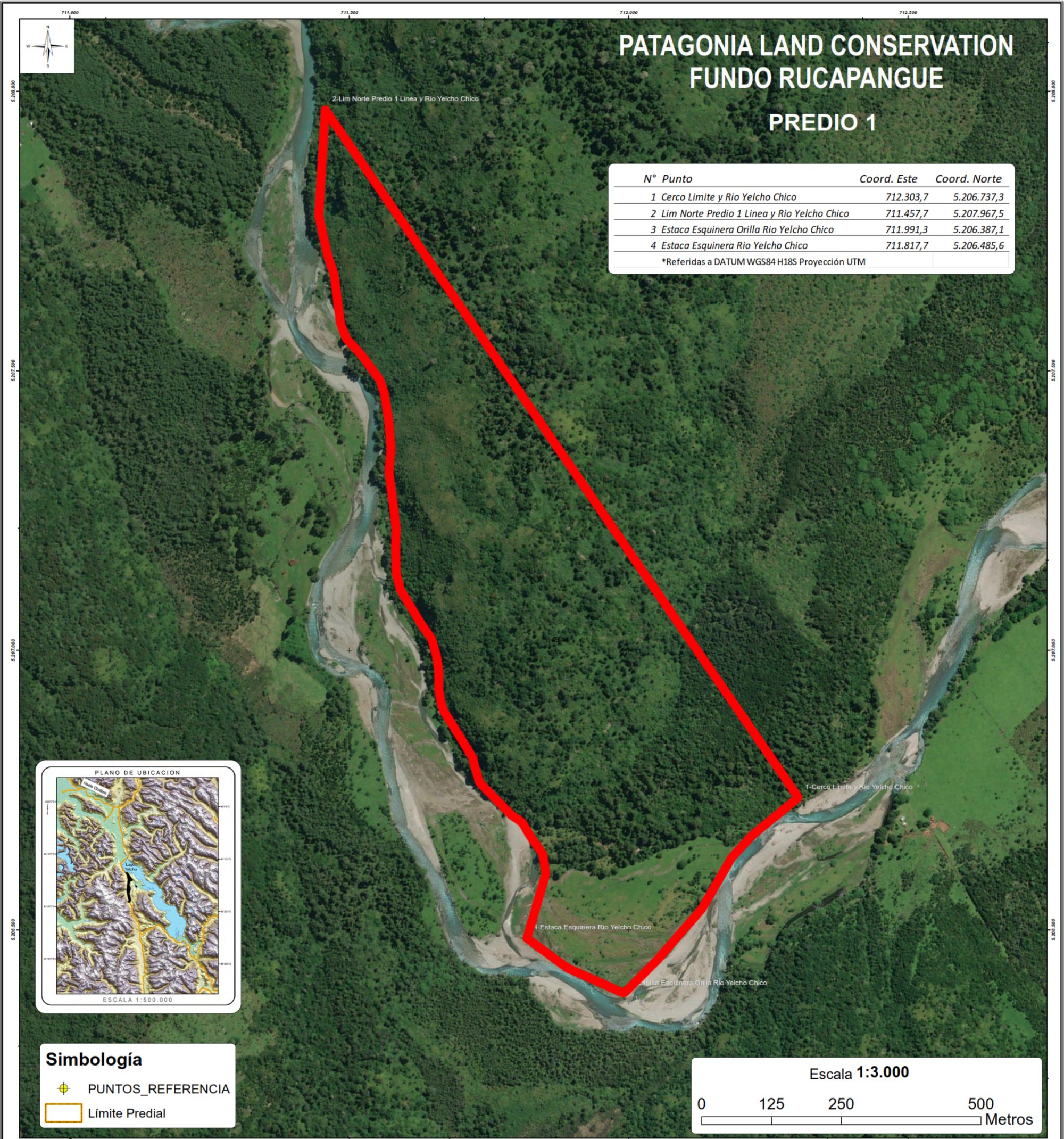
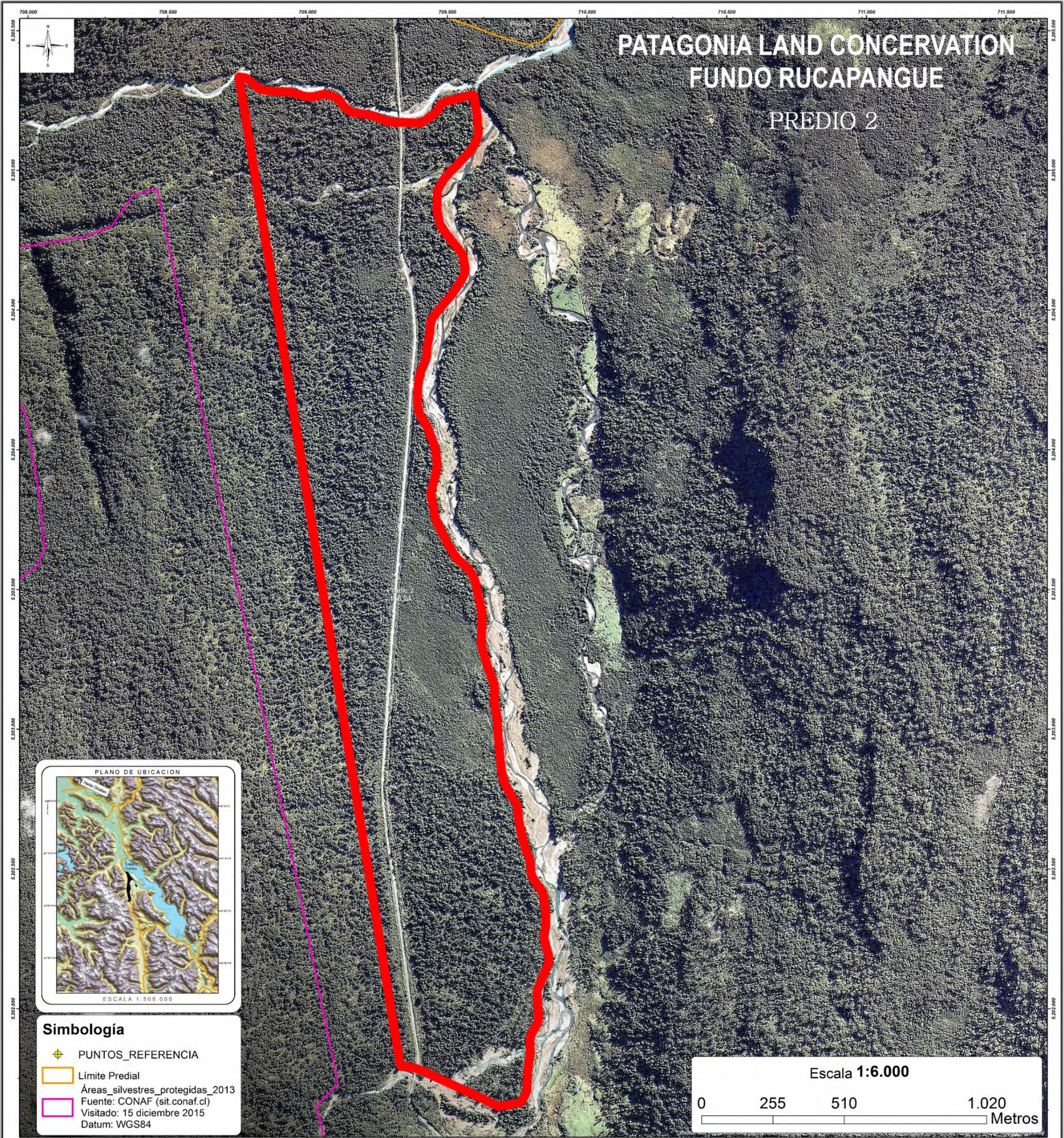
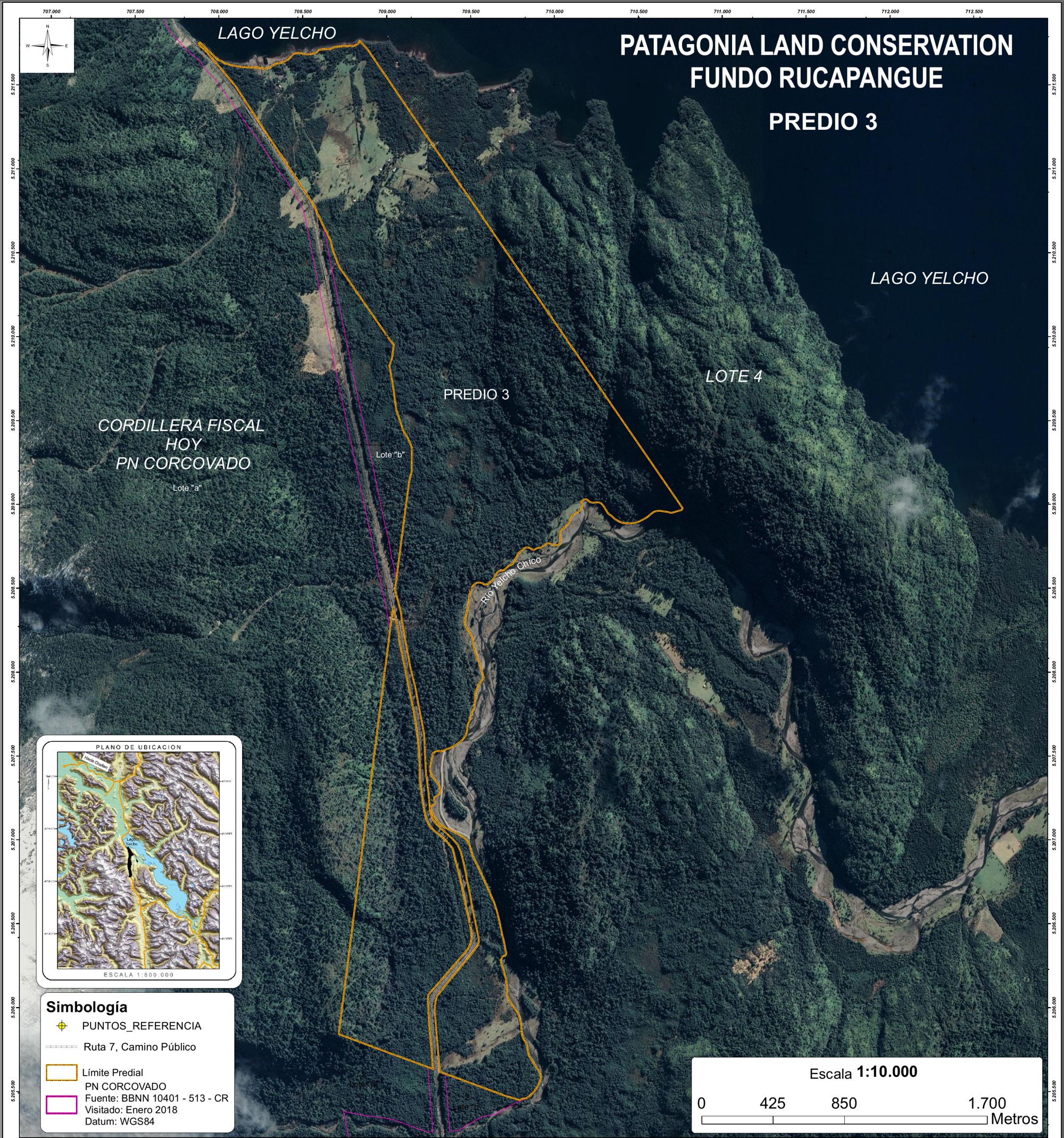
Together they add up to the 750 hectares. The maps show the boundaries of each one over satellite imagery; labels are in Spanish. Tap a map to see it full size.

General map of the three properties of Fundo Rucapangue over satellite imagery
General mapThe three properties together, with Lake Yelcho and Corcovado National Park to the west.
Boundary map of Property 1 of Fundo Rucapangue
Property 1 · 38.75 haBeside the Yelcho Chico River.
Boundary map of Property 2 of Fundo Rucapangue
Property 2 · 191.25 haBetween the Ventisquero, Moraga and Sonoro rivers.
Boundary map of Property 3 of Fundo Rucapangue
Property 3 · 520 haThe largest, with the Lake Yelcho shoreline.

Property boundary maps prepared by Campo Digital (2016 and 2021). Areas are those in the title deeds.

What it produces

Eight areas of work, each with its own target

The farm supplies part of what the hotel kitchen and wood stoves need, and sells what it raises. Each area has a target, a working rhythm and a record.

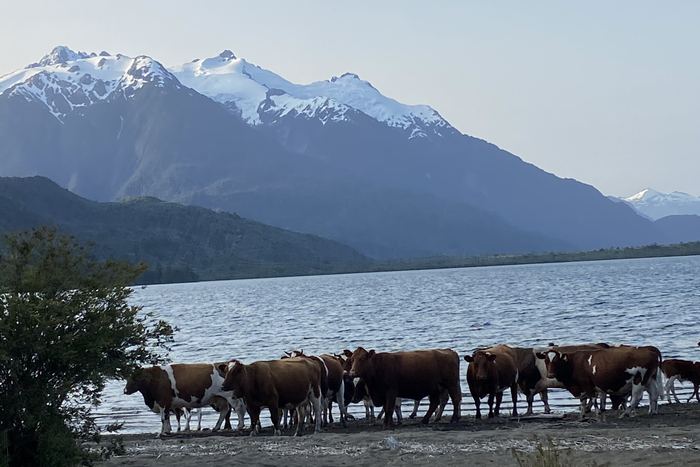
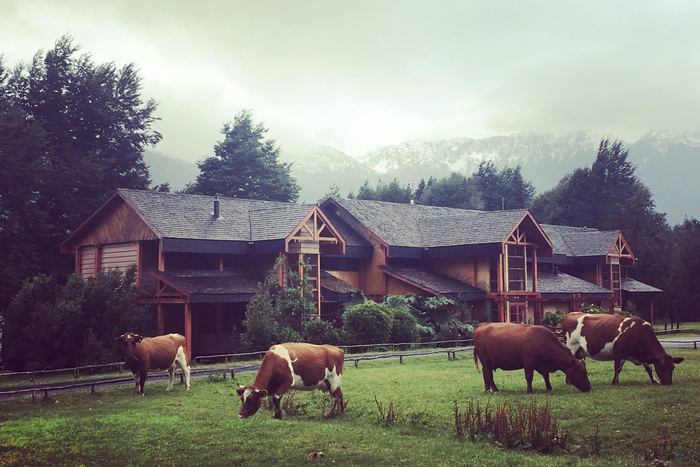
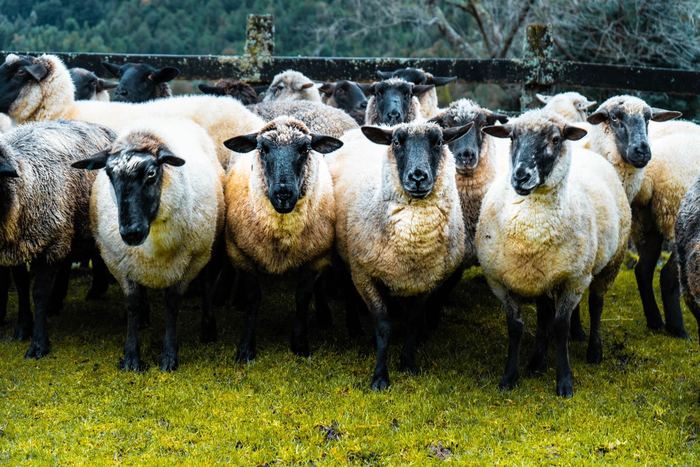
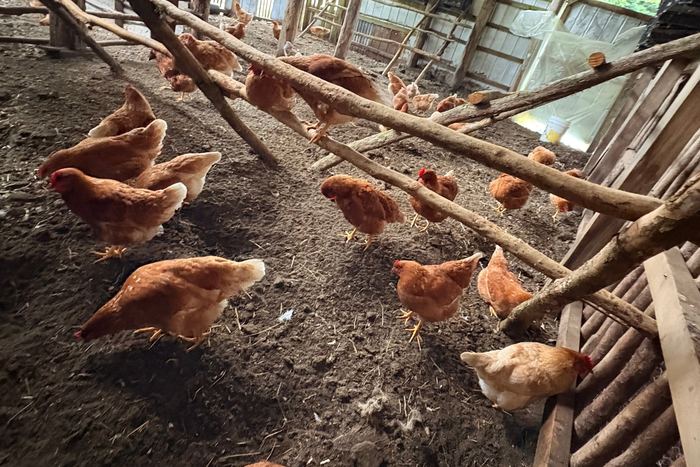
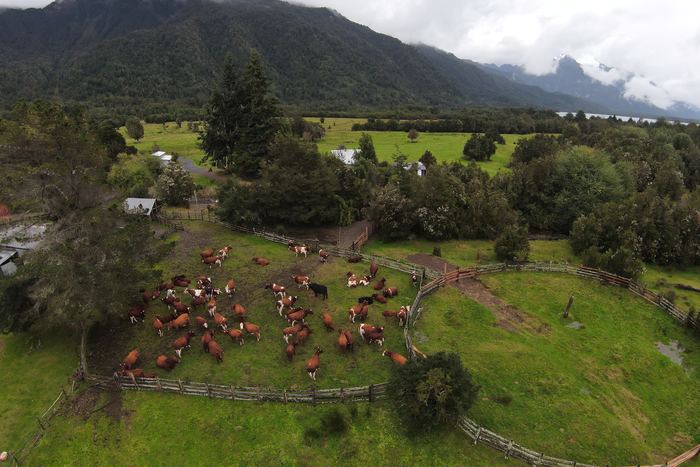
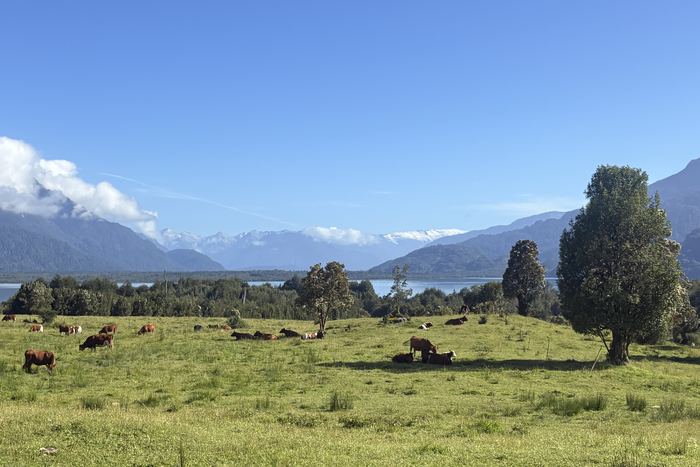
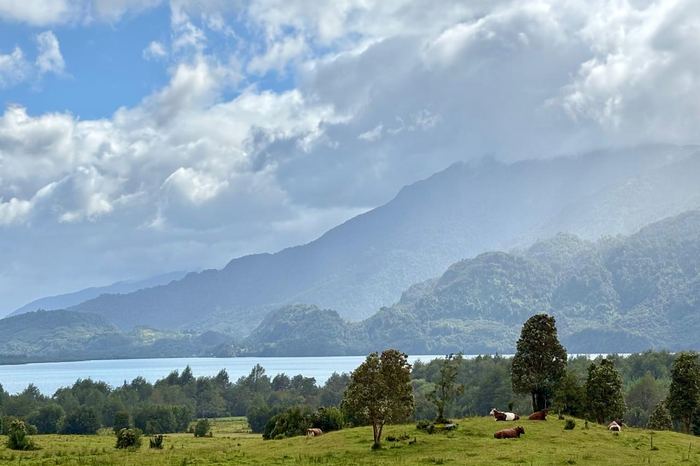
Cows grazing in front of the hotel, with snowy mountains in the clouds Black-faced sheep from the flock, by a fence Red hens inside the wooden hen house Cattle gathered in a corral on the farm, seen from the air Pasture with cattle grazing and Lake Yelcho behind Open pasture with scattered trees, Lake Yelcho and mountains in cloud

Cattle

Target: 50 breeding cows with 2 bulls

A cow-calf herd. Calves are born between August and October and sold at the livestock market in April. Management is kept simple on purpose: it should not take more than half of one person’s working day.

Rhythm
Daily rounds in the field
Recorded
Monthly headcount, births, deaths and sales
Sheep

Target: 50 ewes with 2 rams

The plan is to rebuild the flock the farm once had, then grow it. Lambs are sold once a year. Today the wool from shearing is thrown away: a study is under way to turn it into pellets to fertilise the kitchen garden and the grounds.

Rhythm
Daily check and a yearly management plan
Recorded
Monthly ewe count, births, deaths and sales

Hens

Target: 100 hens, 60 eggs a day for the hotel

In summer the full flock supplies the restaurant. In winter only the 50 youngest hens stay, with no artificial light, and they lay less: those eggs go to the staff and the rest are sold to neighbours.

Rhythm
Feed, water and egg collection every day
Recorded
Eggs per day, deliveries to the kitchen and live birds

Kitchen garden and compost

A planting plan agreed with the kitchen

The garden is planted each season according to what the kitchen will use. Kitchen scraps go to the composter and come back to the garden as compost.

Rhythm
Daily work; the composter is loaded every day in summer
Recorded
What was sown, what was harvested and what went to the kitchen

Firewood

Target: 200 m³ a year, under 25% moisture

Mixed firewood, cut to 30 to 50 cm. It is split with a hydraulic splitter and dried under cover for 6 to 12 months. The oldest stack is always used first, and moisture is measured before any wood is delivered.

Rhythm
Production from May to October, about 27 m³ a month
Recorded
m³ produced, m³ delivered by destination and dry stock

Pastures

First the inventory, then the mowing plan

There are grazing paddocks, the lawns of the hotel, cabins and campsite, and the edges of roads and tracks. Each needs a different tool: a tractor with a rotary slasher, a lawn mower or a brush cutter.

Rhythm
According to each month’s mowing plan
Recorded
Date, pasture and hours for each cut

Trails

Every trail on the property, open and walkable

Clearing, drainage, muddy stretches, boardwalks and signs. Every improvement is logged with before and after photos.

Rhythm
A full walk-through every month in winter and every two weeks in summer
Recorded
The condition of each trail

Horseback rides and lamb

In season only, November to April

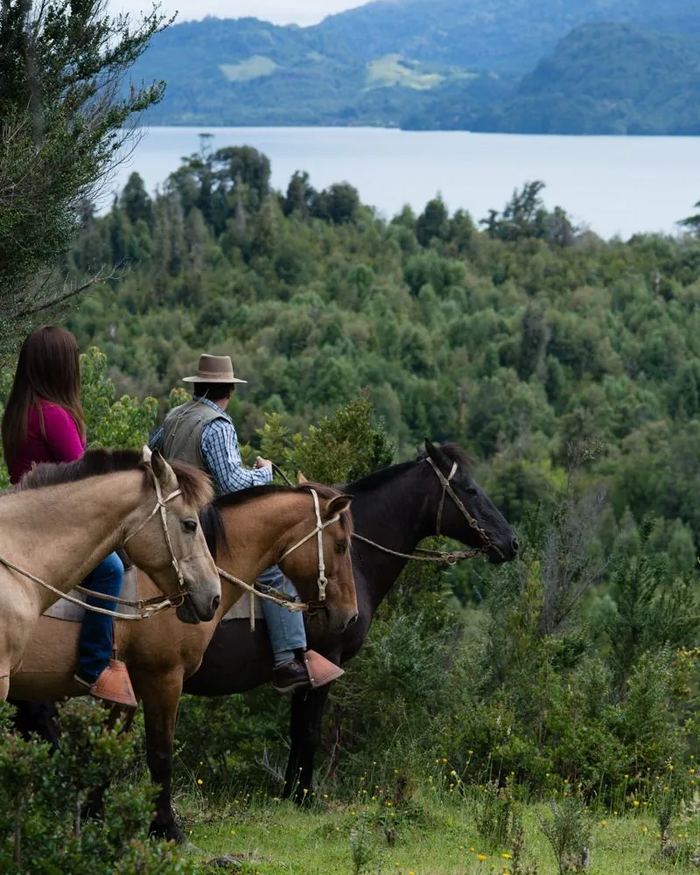
Rides are led by the same people who work the farm, on the farm’s own horses. The same goes for the spit-roasted lamb: it is cooked by the person who raises it.

Rhythm
Each ride or roast as booked
Recorded
Rides done and the condition of the horses

The year on the farm

Two seasons

Winter runs from May to October and sets the base: those jobs continue all year. In summer, with visitors here, more are added.

Swipe sideways to see the whole year.

WinterSummer, visitor season
MayJunJulAugSepOctNovDecJanFebMarApr
Cattle Winter feed Calving Breeding Preg. check Sale
Sheep Lambing
Hens 50 hens, no artificial light Pullets 100 hens, 60 eggs a day for the hotel
Firewood Production: about 27 m³ a month Drying, and delivery of dry wood Start-up
Lawns Last cut Mown only if needed Mown every week Every 7 to 10 days Last cut
Trails Monthly walk-through: clearing and drainage Upkeep every two weeks
Visitors Horseback rides and lamb roasts

Replacement pullets are bought in October. Firewood start-up, in March and April, is done while the seasonal worker is still on the farm.

4:06 · no sound, on-screen text · 21 MB

Pastures

The paddocks, one by one

The pasture inventory began by measuring every paddock. This video goes through them from north to south over satellite imagery and shows a data sheet for each.

  • 16 paddocks covering 90.6 hectares
  • Area, perimeter and centre point of each one
  • Estimated upkeep: 74.5 working days in total
  • Equipment needed and what has to be cleared: rushes, blackberry bramble, calafate and shrubs
The farm seen from the south at dusk: the Carretera Austral through native forest, pastures in the middle and Lake Yelcho
The farm from the south: the Carretera Austral through the forest, the pastures in the middle and, on the lake shore, the hotel, the cabins and the campsite.

Forest and conservation

A forest that is used without being lost

Native evergreen forest covers 627 hectares, 84% of the farm. Coigüe de Chiloé and mañío dominate, with ulmo, tepa, canelo, tineo, luma and arrayán, the Chilean myrtle you can tell by its reddish trunk.

  • Wood from fallen trees. The timber and firewood used today come from trees already brought down by wind, age or a storm, not from standing trees.
  • Conservation easements. Parts of the farm are protected under Chile’s derecho real de conservación, a legal instrument that keeps the protection in place even if the owners or the economy change.
  • Native forest management plan. A plan for one sector of the forest is under review by CONAF, Chile’s forestry agency, so that it can be worked for generations without losing its structure.

Wildlife and birds

Who else lives here

Forest, pasture, rivers and lake, side by side, make room for very different species. These are the most representative of the area.

In the forest

Pudú (a tiny deer), kodkod (güiña), puma and monito del monte. Among the birds: chucao tapaculo, black-throated huet-huet, thorn-tailed rayadito, Magellanic woodpecker and Chilean flicker.

On the lake and rivers

Southern river otter (huillín). Ringed kingfisher, great grebe, white-tufted grebe, cocoi heron and flightless steamer duck.

In the pastures and the sky

Black-faced ibis, upland goose and ashy-headed goose on the grass. Overhead: Andean condor, southern crested caracara, chimango caracara, Harris’s hawk and variable hawk.

The forest mammals are shy, and seeing one is a matter of luck. Birds, on the other hand, are seen and heard every day: the chucao calls from the undergrowth and ibises fly in flocks over the paddocks.

Farm management 2027–2030

How it is run

The farm has a manager and a four-year plan. The rule is the same for every area.

One target per area

Cattle, firewood and the hen house already have their number. The other numeric targets will be set in a second stage, once there is a first year of data.

A working rhythm

Each area states how often things are done: daily, fortnightly, monthly, and what depends on the season.

A record

What gets done is written down: headcounts, births, harvests, cubic metres, mowing hours. The plan is met when the targets are met and the record exists.

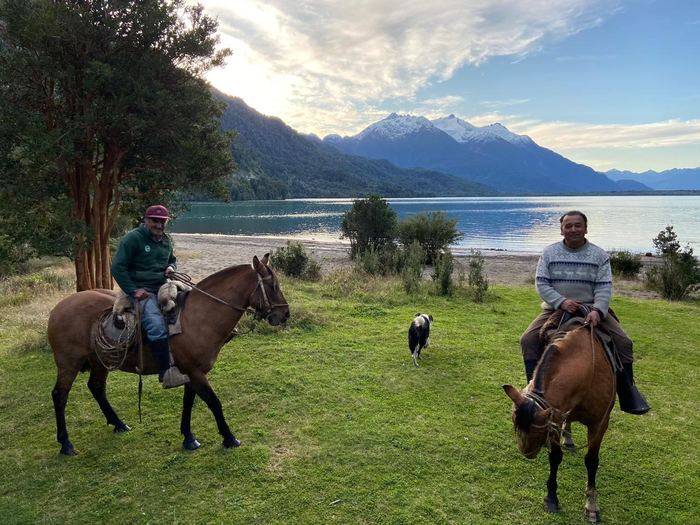
Two riders on horseback on the beach of Lake Yelcho, with a dog and snowy mountains behind
Adán Vera and Luis Antillanca, on the lake beach.
The team
Farm managerDecides, plans, buys and sells. Is there for calving and lambing, and covers the team’s days off when something cannot wait.
Farm worker, all yearKeeps the daily work going: livestock rounds, the hen house, the garden in winter and firewood production.
Seasonal worker, November to AprilTakes on the summer load: watering, harvesting, mowing, trails, the composter and the calf sale in April.
Who does what, in three examples
Calving and lambing, August to OctoberThe manager and the farm worker attend them together.
A lamb roast or a rideDone by the farm worker. That day the seasonal worker covers his daily tasks.
Planting planDrawn up by the manager with the kitchen, before each season.

If you are passing through

What you see of the farm when you stay at Yelcho

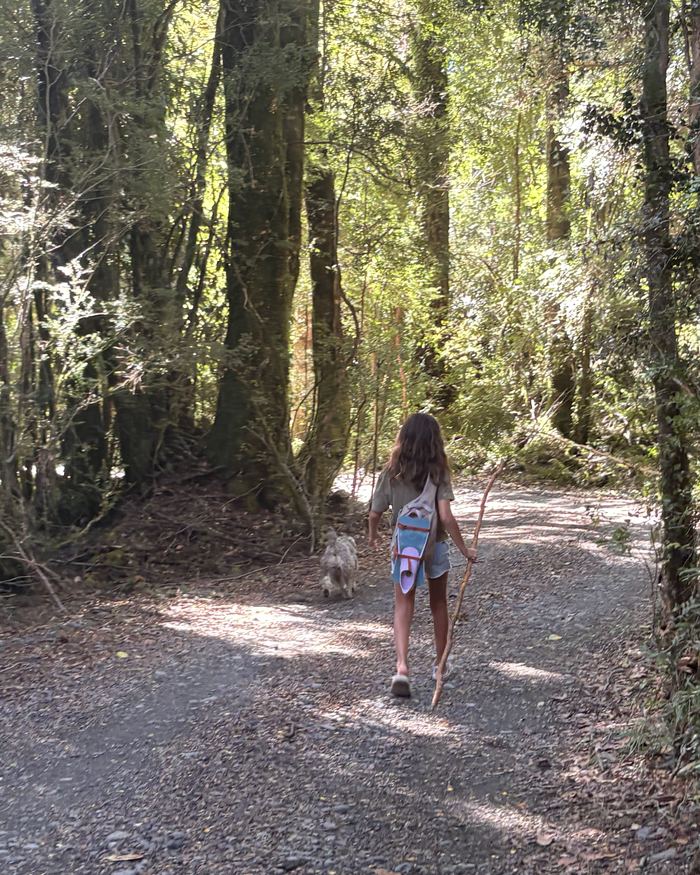
Animals grazing in the same pastures you walk through, trails in native forest, the garden that supplies the kitchen and the lake a few steps away. The landscape does not look this way because no one touches it, but because someone looks after it.

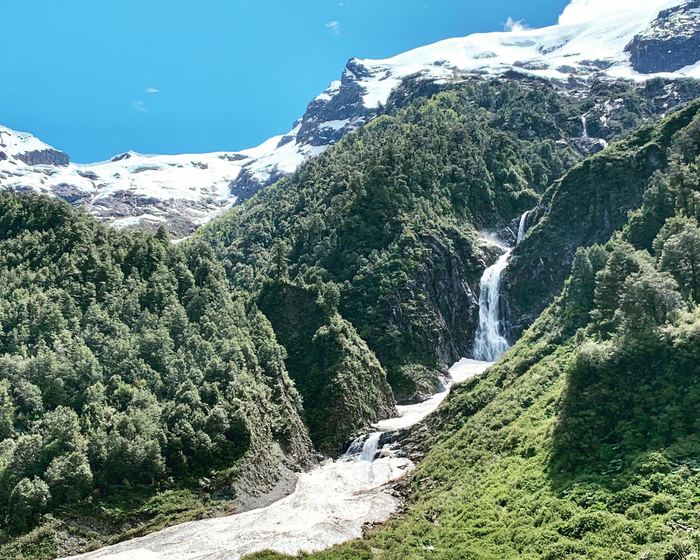
Waterfall coming down from the Yelcho Glacier between forested slopes, with the ice above
The Yelcho Glacier (Ventisquero Yelcho), at the end of the trail.

Trail

The trail to the Yelcho Glacier

The trail to the Yelcho Glacier starts from the southern part of the property. It was opened by Chile’s Ministry of National Assets and is a designated Protected National Asset.

It runs through native forest and ends facing the ice and the waterfall that comes down from the glacier. Like everything here, it depends on the weather: after several days of rain there is mud and the streams run high.

The hotel, cabins and campsite are at yelcho.cl.